CHALLENGE
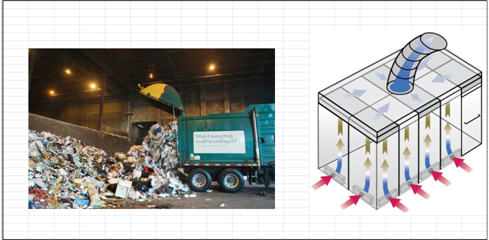
One of the biggest challenges facing owners and operators of transfer stations and material recovery facilities (MRF) is odors. While transfer stations are a vital part of the municipal infrastructure, their presence is not welcome by its neighbors. Local enforcement agencies routinely get complaints of odors and dust from nearby residents. In order to minimize odors, transfer stations and MRFs must find ways to capture and treat their odors.
APPROACH
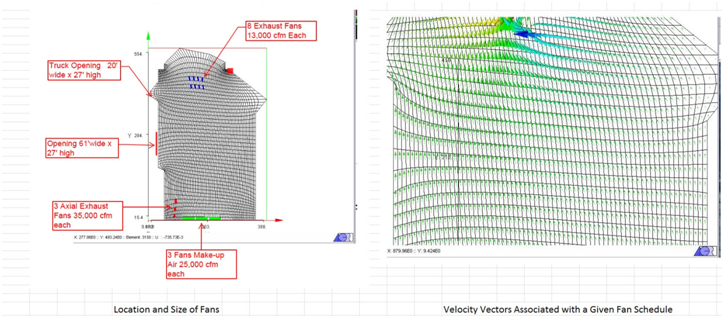
Install exhaust fans that capture the odors from inside the transfer station and treat the odors using carbon filtration, thermal oxidation or use of odor neutralizers. Large exhaust fans are used to capture the odors. However, the number, size and placement of the fans are critical parameters that will determine the efficiency of the capture system.
Rather than relying on empirical rules or intuition, CFD offers an ideal tool for determining airflow associated with locating fans at a specific location. This approach optimizes the size, number and placement of exhaust fans to maximize performance and minimizing capital and energy costs.
FINDINGS
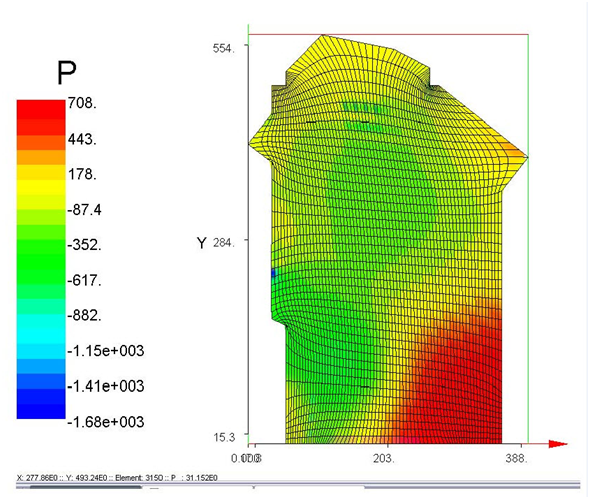
The results of the analysis clearly show the air movement and negative pressure distribution inside the transfer station. It also shows “dead spots” where there is no air movement indicating that odors were not being captured. By placing the fans of different sizes at various locations, an optimum configuration was identified that maximized the capture of odors while minimizing energy costs.